Twinberry Commons is a 501(c)3 nonprofit public benefit organization in Cottage Grove, organized and operated exclusively for charitable and educational purposes.
Twinberry Commons mission is to cultivate a welcoming and vibrant community supporting sustainable farmers, producers and artisans.
Twinberry Commons is an umbrella organization working on developing a community space that meets the needs of the local community for access to healthy, fresh, sustainably grown and produced foods; learning new skills and gaining knowledge through community based educational gatherings, events, and workshops; transitioning its local Farm Stand into a food co-op to ensure its long term survival and creating the foundation for our Commons – a public space where local population and visitors can gather knowledge and develop common ground.
We also plan to partner with local experts, agencies, and other nonprofits to develop an educational incubator training program to support small, local businesses.
IDEA OF NAME
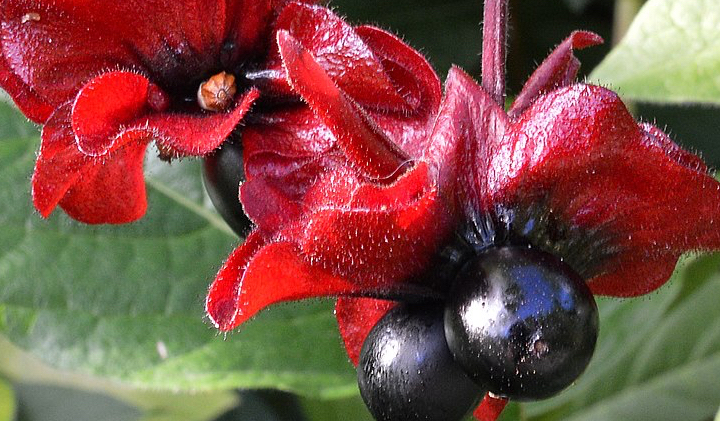
After reaching out to community members who have supported the Coast Fork Farm Stand over the years, the Twinberry Board of Directors chose a name that is tied to nature, holds qualities that align with the mission of the organization, resonates with the geography and history of Cottage Grove and shares the vision of community resources for collective benefit. The Twinberry plant consists of a pair of leaves from which a pair of flowers grow, which in turn become a pair of berries. Duality is recurring within the vision and mission of the organization – food & health; town & country; social & economic development; serving community & supporting small, local businesses.
Duality is also found in the native environment of Cottage Grove, which is home to two lakes – Dorena Lake and Cottage Grove Lake; two rivers – Row River and Coast Fork Willamette River; two valleys – Delight Valley and Row River Valley. Historically, there was a time when Cottage Grove had two names, in 1893 the east side of town, across the river, was named Lemati – a Native American word for peaceful valley. The city had two names on its city sign until it again consolidated in 1899 to just being named Cottage Grove (nicknamed Slabtown).
MEANING OF NAME
Twinberry – also known as “twinberry honeysuckle”, is a native plant to Oregon and the flower is a source of nectar for hummingbirds in particular, along with butterflies, bees and other insect pollinators. Twinberry is valuable for erosion control and restoration, for soil bioengineering practices, pollinator gardens, rain gardens, habitat hedgerows and pollution resistant wind shelters.
Thousands of pairs of yellow, tubular flowers emerge in April and continue blooming all summer long. As the season progresses, the flowers become encased in red bracts that eventually hold its shiny black, “twin” berries, eaten by birds and bears. Most native tribes associate this plant with the crow.
Natives used the Twinberry leaves, bark and twigs for a variety of medicinal purposes. An infusion of bark was used as a soak for sore feet and legs, as an eyewash, or in the treatment of coughs. Women chewed the leaves during confinement. Leaves were also chewed and applied to itchy skin and various sores. The berries were mostly considered poisonous, but were sometimes eaten for food. The fruit or leaves were used to induce vomiting for purification or after poisoning. The berries were applied to the scalp to prevent dandruff or to prevent hair from turning gray. The juice of the berries was used to paint the faces of dolls and for basketry dye.
Commons – a general term for shared resources in which each stakeholder has an equal interest; provisions shared in common; land or resources belonging to or affecting the whole of a community; a piece of open land for public use, especially in a village or town; a form of service used by many.
The commons is the cultural and natural resources accessible to all members of a society, including natural materials such as air, water, and a habitable Earth. Commons can also be understood as natural resources that groups of people (communities, user groups) manage for individual and collective benefit. Characteristically, this involves a variety of informal norms and values (social practice) employed for a governance mechanism. Commons can also be defined as a social practice of governing a resource not by state or market but by a community of users that self-governs the resource through institutions that it creates.
With roots in European history, the idea being that all nature’s bounty is regarded as the inheritance of humanity as a whole, to be shared together. In this context, one may go back further, to the Roman legal category res communis, applied to things common to all to be used and enjoyed by everyone, as opposed to res publica, applied to public property managed by the government.
Twinberry Commons also shares the vision of a vibrant, interdependent local economy that provides meaningful and remunerative livelihoods, encourages the recognition of our common humanity, and regenerates our ecological and social commons.
 twinberrycommons.com
Leave a comment